
Intro
Reviewed By: Global Hair Experts
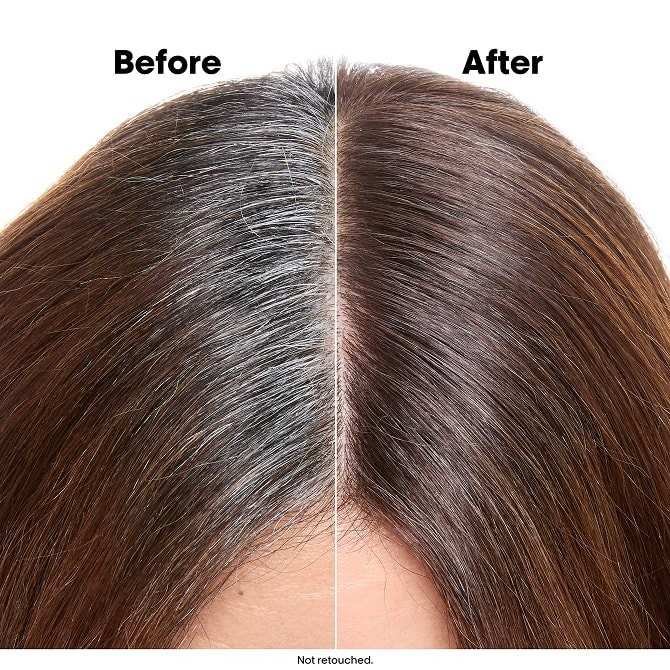
Despite sounding similar, both grey blending vs. grey coverage are genuinely different approaches, each with a different outcome, maintenance rhythm, and ideal candidate. Getting clarity on the distinction is what makes the difference between a color result you love and one you're already managing. Here's everything you need to know.
In a Nutshell
Grey blending creates soft, natural dimension, while grey coverage delivers fuller, more even color. Discover the key differences in finish, maintenance, and overall hair look. Find the perfect grey hair approach for your style and routine.
What is Grey Coverage?
Grey coverage is exactly what it sounds like: a color service designed to fully mask grey or white hair so it matches your natural base tone, or a chosen color, with maximum opacity. It uses permanent color to penetrate deep into the cortex and deposit pigment that completely overwrites the grey, producing a uniform, single-tone result from root to tip.
Coverage is the traditional approach to grey management. It's bold, uniform, and decidedly thorough, which makes it the right choice for anyone who wants a clean, high-impact result with no visible grey. The trade-off is that as the hair grows, a distinct regrowth line forms at the root, typically requiring a touch-up every 4-5 weeks to maintain the effect.
What is Grey Blending?
Grey blending is a softer, more dimensional and low-maintenance coloring technique that diffuses grey hair into the rest of the hair instead of fully covering every strand. Unlike traditional coverage, grey blending works with your natural greys to create a seamless transition between colored and non-colored hair.
When discussing grey blending vs grey coverage, blending is typically chosen by people who want softer regrowth and less obvious root lines. Professional techniques like French blending may combine demi-permanent colors, tonal layering, glossing services, and strategic placement to create dimension and movement throughout the hair.
Grey blending is often ideal for people who:
- Prefer softer, natural-looking color
- Want lower-maintenance salon visits
- Like dimensional hair color
- Are transitioning into grey gradually
- Want less noticeable regrowth
Compared to traditional coloring, blending creates a more subtle relationship between natural grey hair and colored sections.
Coverage vs. Blending: Key Differences
|
Feature |
Grey Coverage |
Grey Blending |
|
Result |
Fully covers grey strands with a uniform color finish |
Softly blends greys into the natural hair color |
|
Overall Look |
Dense, polished, and even-toned |
Natural, dimensional, and softer-looking |
|
Grey Visibility |
Minimal to no visible greys |
Some greys remain softly diffused |
|
Regrowth Appearance |
Root regrowth becomes visible faster |
Softer grow-out with less harsh lines |
|
Maintenance Level |
Requires more frequent touch-ups |
Lower-maintenance salon upkeep |
|
Best For |
Higher percentages of grey hair |
Early greys or salt-and-pepper stages |
|
Color Techniques Used |
Permanent hair color |
Demi-permanent color, glossing, tonal layering |
|
Recommended Products |
||
|
Hair Finish |
Solid and opaque |
Lightweight and multi-dimensional |
|
Ideal Hair Goal |
Complete grey concealment |
Natural-looking grey transition |
Step-by-Step Routine for Colored Hair
Whether you choose blending or full coverage, maintaining colored hair properly helps preserve shine, softness, and color longevity.
Step 1: Use a Color-Protect Shampoo
Wash hair using the L’Oréal Professionnel Vitamino Color Spectrum Shampoo to cleanse while helping preserve color vibrancy and shine gently.
- Why It Works:
Color-safe cleansing helps reduce premature fading while maintaining smoother-looking hair.
Step 2: Apply a Nourishing Hair Mask
Use the L’Oréal Professionnel Vitamino Color Spectrum Mask once or twice a week to hydrate colored strands and improve softness.
- Why It Works:
Masks help replenish moisture lost during coloring and smooth the hair surface for better light reflection.
Step 3: Protect Hair From Heat
Always apply a heat protectant before blow-drying or styling your hair.
- Why It Works:
Heat protection helps reduce dryness, roughness, and color fading caused by high temperatures.
Step 4: Add a Shine Serum
Finish with a serum for colored hair on mid-lengths and ends for extra smoothness and gloss.
- Why It Works:
Serums help seal the cuticle and enhance shine without weighing the hair down.
Step 5: Avoid Overwashing
Try not to shampoo excessively, especially with hot water.
- Why It Works:
Frequent washing can strip color molecules faster and make colored hair appear dull.
Grey hair no longer follows a one-size-fits-all approach. Whether you choose complete coverage or soft blending, modern coloring techniques allow you to personalize your grey hair journey based on your comfort, style, and maintenance preferences. Understanding grey blending vs grey coverage can help you make a more informed decision and achieve results that feel polished, modern, and natural.